
This true story begins on a November evening in a cosy 1960s living room, and ends in 2016. A story of family life, knitting and a visit to a convent guest house.
The single, shaded ceiling lamp lit up the room with its brown table, brown dining chairs, brown sideboard, brown settee and orange cushioned brown armchairs all set on a brown and orange carpet. The flame effect, two bar electric fire warmed the air with its cheery glow and the light reflected on the fibre glass curtains decorated with brown leaves. Those curtains were changed to match the seasons and covered the windows at either end of the room which we called big. The big room was where we sat, played, listened to records, danced, watched television and ate on Sundays. Our other downstairs rooms were a kitchen and a bathroom. Upstairs were three bedrooms. This is where I lived until I was sixteen.
The Beginning.
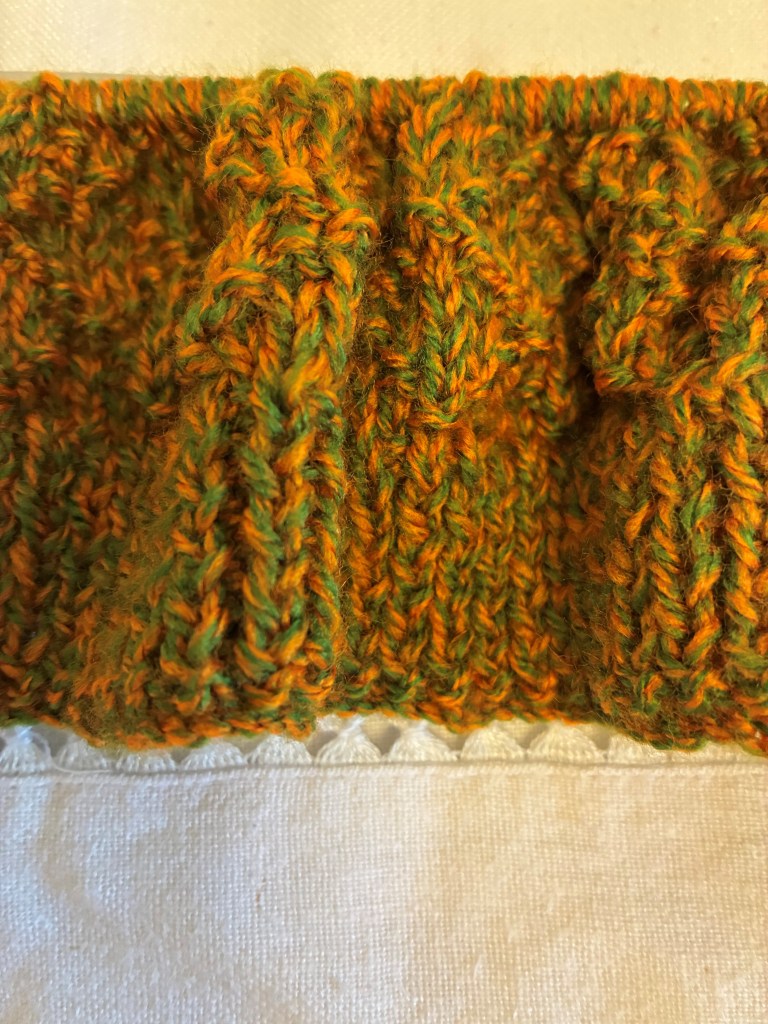
I find the start of any knitting project is the most difficult time. The stitches are tight and unwieldy. Each stitch stands alone and feels disconnected to the others. There is no supportive framework.
It was Wednesday evening, one of my favourite times of the week, not because my dad and elder brother were out at scouts and my younger brother was in bed, but because the room was full of women and for a while I was part of them.
Mam was there, of course, and so was my aunty (mam’s sister) and my own sister, who had already left home. They met together with their knitting and while they knitted and talked, talked and knitted, I listened. I could be very quiet, I could turn invisible, so maybe they forgot I was there and didn’t send me to bed. That was my time for listening and learning about work, friendship, clothes, hairstyles and married life and that time was precious. It set a good foundation for me.
I did learn to knit (that’s the subject for another post), but not on those Wednesday evenings in the mid-1960s. There was far too much to talk about to have time for lessons.
The Middle.
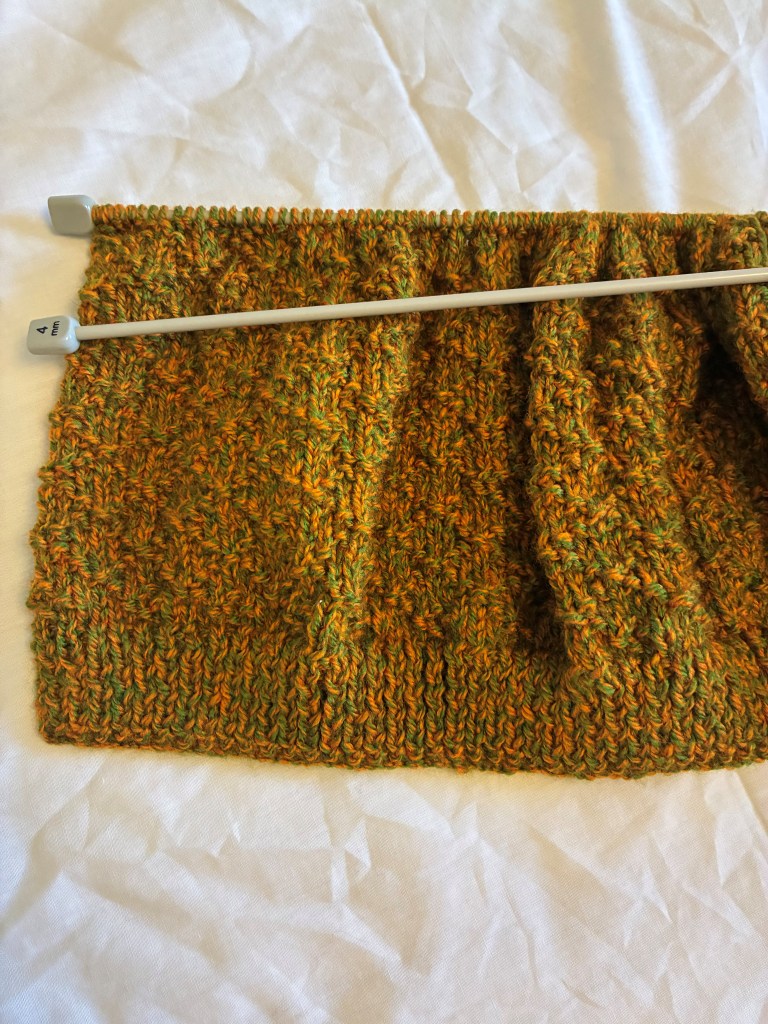
The middle of a piece of knitting is the best and easiest part. The stitches know what they’re doing and support each other. The stitches that are already in place hold everything together and the pattern emerges.
About forty years later, in 2003, I would recall those evenings. Then, I was a green curate in a small-town parish church and I went on retreat to Saint Oswald’s pastoral centre in Sleights, North Yorkshire. Although I hadn’t even looked at a knitting needle for years, in the week before I left, I had a strangely urgent yearning to do some knitting! That yearning was irresistible and without knowing why, I went into our local chemist’s shop and bought rainbow wool, needles and a pattern for a baby’s jumper. I guess I thought I could manage something that small!
So, when I packed my bag, I included my knitting kit along with a notebook and pen, novel and clean knickers and socks. The journey lasted a day and took me from Nottingham to York by train, then across the Yorkshire Moors by bus. It carried me far away from the city and responsibility to a small village and into a convent guest house, generous with food, time, quiet, space and attention.
One nun was allocated to me for the week as a spiritual director, and that evening when we had our introductory talk, I told her about the knitting urge. Excellent! She said, knitting’s a good thing to do on retreat. Before bedtime, another nun had told me that knitting is the best way to pray. That night when I began to laboriously work out how to cast on stitches and get started, I wondered what they meant. I didn’t have to wait long to find out.
At breakfast on my first morning, one of the nuns came to me looking concerned. My sister had phoned the house with sad news and a request. My aunty (mam’s sister) had died in the night, and would I take her funeral? This wasn’t a surprise, I knew how ill aunty was. I’d visited her in the week before I went away and knew it wouldn’t be long. Not a surprise, then, but definitely a shock. Aunty had always been part of my life and being childless herself, she made life better for her nieces and nephews.
That certainly changed the direction of my retreat. I was treated with great kindness and the spiritual direction for the week was to knit and remember my aunty.
Remember I did. As I struggled on, deciphering the pattern, knitting and purling, increasing and decreasing, happy and thankful memories flooded my mind. Those long-forgotten Wednesday evenings came alive, and I realised my real inheritance of laughing, teasing, friendly support. While I knitted that jumper, I knitted my life back together.
The End.
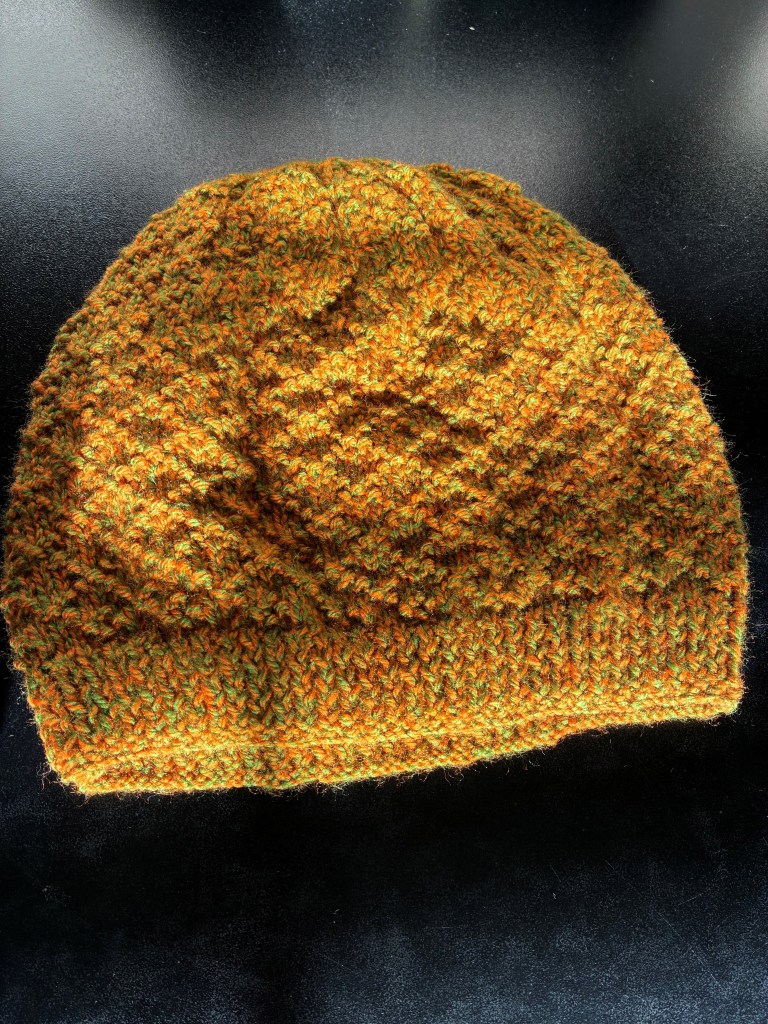
The end of a piece of knitting can be traumatic and tricky. You don’t really know how it’s going to turn out until you’ve finished. Sewing together the separate parts can be hard and it’s easy to go wrong. And after all that, you know that the next piece of knitting is going to be casting on!
In 2016, when I was vicar of a group of village churches, I used the tiny jumper with the too long sleeves, in a Christmas talk for children, focusing on what gifts you might give to a newborn baby!
I’m very grateful to my mam, all my aunts (there were a lot of them!) and my sister and I will always cherish those Wednesday evenings. I’m also grateful to the Sisters of the Holy Paraclete and their wise, generous and kind care of me at St Oswald’s.
Who are you grateful to, this week?
What did you call your living room when you were a child?
Wander well,
Mandy.
Things I love:
- Knitting.
- A good chat.
- A retreat.
St Oswald’s house in Sleights is closed now, but you can visit the Sisters of the Holy Paraclete (Holy Spirit) at St Hilda’s Priory in Whitby. You can go for the day, a holiday or a retreat.
Family story, 1960s, childhood, mother, aunt, sister, knitting, retreat, death in the family.
/
 Wandering Through The Land Of Nod.
Leave a comment